

Light Therapy
Red & LED Light Therapy
Discover the science behind Red Light Therapy
Red Light Therapy (RLT) isn't just a wellness trend—it's backed by decades of scientific research. Originally studied by NASA to help astronauts heal faster in space, RLT has since been clinically tested in areas like dermatology, sports medicine, and chronic pain treatment.
How it works, in simple terms
Your body's cells have tiny "engines" called mitochondria that produce energy (ATP). When red or near-infrared light enters the skin, it stimulates these mitochondria to work more efficiently—kind of like charging a battery. This boost in cellular energy helps your body heal, repair, and perform better. Scientists call this process photobiomodulation, and it has been shown in clinical studies to improve cellular health, reduce inflammation, and enhance tissue regeneration.
To learn more, see the research: PMC6133043, PMC5843358, PMC6685747.
Ready When You Are
Add Light Therapy to your appointment
Just add 15 minutes to your regular Acupuncture, Massage, or Combo appointment and enjoy.
Subsequent Acupuncture + Light Therapy
$110
Combo Acupuncture & Massage + Light Therapy
$165
60-Minute Massage + Light Therapy
$125
30-Minute Massage + Light Therapy
$80
Why It Helps
5 proven benefits of Red Light Therapy
Reduced pain & inflammation
Multiple studies confirm RLT reduces inflammation in joints and muscles by improving blood flow and decreasing oxidative stress—effective for arthritis, tendonitis, and general aches and pains.
Faster muscle recovery
Athletes use RLT to speed up recovery after workouts or injury. Scientific reviews show red light helps muscle tissue repair faster and may reduce delayed-onset muscle soreness.
Better mood & sleep
Red light exposure, especially in the evening, can help regulate your circadian rhythm, leading to better sleep quality, a calmer mood, and reduced seasonal affective symptoms.
Accelerated wound healing
Red light increases blood flow and stimulates new cell production, helping wounds, scars, and surgical incisions heal more quickly and cleanly.
Healthier, younger-looking skin
Red light stimulates collagen and elastin production, which can reduce fine lines, wrinkles, and sun damage—improving skin tone and texture over time.

Healing with Light Therapy

Blue Light
465 nm
-
Treats acne
-
Targets oil glands
-
Kills bacteria
Perfect for acne-prone or oily skin.
Often used in combination with red light
to reduce acne and promote healing.

Red Light
633 nm
-
Boosts collagen
-
Promotes skin healing
-
Reduces inflammation
Best for anti-aging, scar repair, and general skin health.

Yellow Light
590 nm
-
Reduces redness
-
Improves lymphatic flow
-
Revitalizes dull-skin
Ideal for sensitive skin, post-treatment care, or dull complexion.

Near-Infrared Light
850 nm
-
Reduces pain
-
Eases joint and muscle pain
-
Enhances circulation
Ideal for sports recovery, chronic pain, arthritis, or post-op support.

Flexible LED Light Therapy Pad


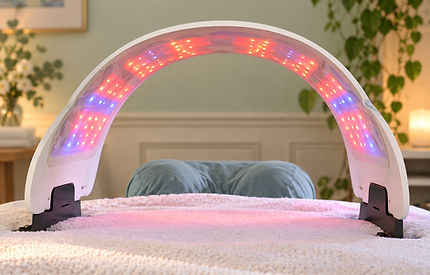
LP Healing uses a medical-grade flexible LED light pad that molds comfortably to your body for maximum contact and healing. This advanced device is:
-
Soft and bendable – It can gently lay flat across your back, shoulders, or legs.
-
Form-fitting – It can be formed into a “n” shape above the face, targeting skin evenly from all sides.
-
Multi-wavelength – Delivers Red (633nm) and Near-Infrared (850nm) light for deep tissue support, and optionally Blue or Yellow light for surface-level skin benefits.
-
Hands-free and relaxing – You can lie back comfortably while the pad does the work—no discomfort, no downtime.
Why it's special:
Unlike rigid light panels, this flexible pad conforms to your unique shape, ensuring even light distribution and closer contact with the skin, which means better results in less time.

⚠️ Contraindications for LED Therapy
Clients with the following conditions should avoid LED therapy or consult their healthcare provider before use:
Photosensitivity
-
Individuals taking medications or supplements that cause sensitivity to light (e.g., certain antibiotics, Accutane, St. John’s Wort, some anti-inflammatory drugs)
-
Diagnosed photosensitive conditions like lupus or porphyria
Epilepsy or Seizure Disorders
Flickering lights or specific wavelengths may trigger seizures in susceptible individuals
Eye Conditions or Recent Eye Surgery
-
Though LED devices are non-UV, eye protection is recommended
-
Avoid direct exposure if recovering from procedures like LASIK or cataract surgery
Pregnancy (Precautionary)
There is no conclusive evidence of harm, but many providers choose to avoid abdominal or full-body treatments during pregnancy out of caution
Active Cancer or History of Skin Cancer
Light therapy may stimulate cell activity, which could pose a risk in clients with current or recent cancer diagnoses, especially skin-related cancers
Open Wounds, Active Infections, or Severe Skin Conditions
Avoid use over active infections, fresh wounds, or severe inflammatory skin diseases (like eczema or psoriasis flare-ups) unless advised by a physician
Pacemakers or Implanted Medical Devices (for some devices)
Some LED therapy beds or panels emit low-frequency EMF; clients with pacemakers or neurostimulators should consult their doctor
Precautions
-
Avoid LED treatments immediately after chemical peels, microneedling, or laser treatments unless cleared by your provider
-
Wear protective eyewear during treatment, especially under red or blue light
-
Start with shorter sessions if you're new to LED therapy to monitor skin reactions
Good Candidates for LED Therapy
Most healthy individuals can benefit safely from light therapy. If unsure, clients should consult their doctor, especially if they have a chronic condition, are on medication, or are pregnant.